
Unconditional

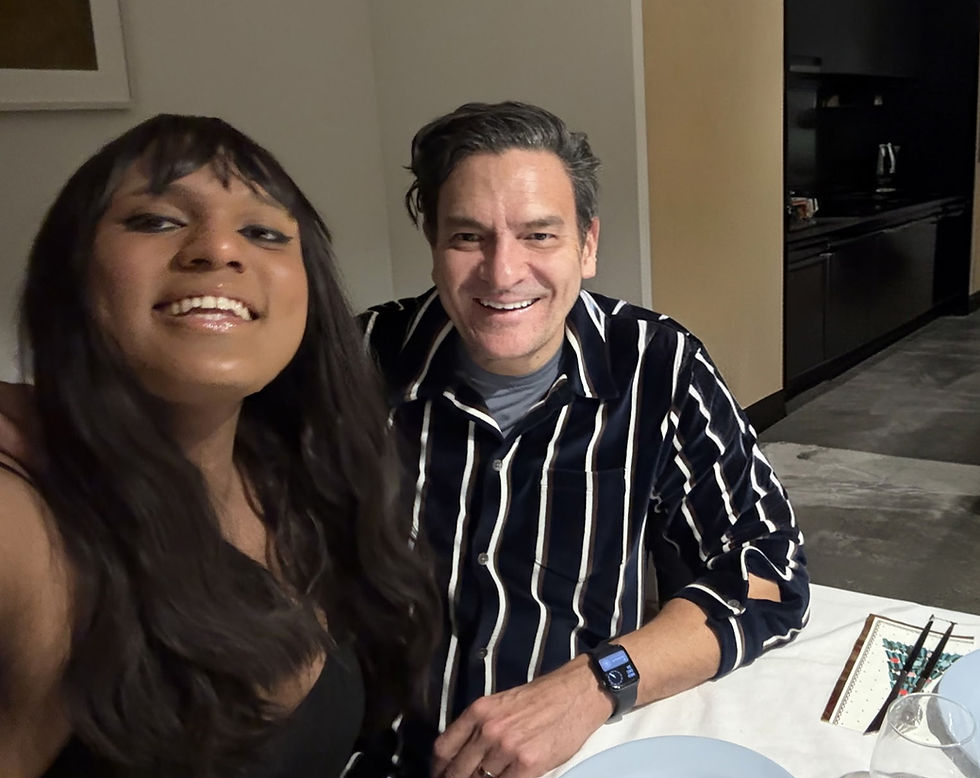
When my wife and I adopted Kade at birth, I already knew what to expect. My oldest was eleven, so I had been through all of the milestones before: the first foods, the first steps, the first words. I was looking forward to all of it again. But it became clear very early on that Kade's development was not following that path. He couldn't do the most basic things other babies do instinctively, like chew, and we had to place a feeding tube so he could get the nutrition he needed. And it wasn't just the feeding. To this day, he has never learned to speak more than 10 words, dress himself, or be toilet-trained.
For a while, I was in denial that something was wrong. I kept telling myself he would catch up, that every child develops differently, that we just needed to give it more time. But at some point, I had to accept that the version of fatherhood I had imagined for him, the one with soccer games and homework at the kitchen table, was not going to happen. And then something surprising followed that feeling: it didn't matter. My love for him didn't change. Not even a little. He couldn't do the things I had assumed he would do, and I loved him completely, without condition.
It took me a long time to understand what that realization was really teaching me.
While I was loving Kade without any expectation of who he would become, I was not doing the same for my oldest child. I was doing what a lot of parents do, especially parents who have achieved some professional success and are still carrying their own unresolved stuff. A lot of my ambition and struggles have been driven by trying to prove my worth to my parents, and, without realizing it, I was passing that same dynamic on to my own kid. Our children don't learn from what we tell them; they learn from observing us.
And it's not just what happens inside the family. So much of how we parent is shaped by what society expects, and we end up, often without thinking about it, measuring our kids against those expectations, treating their achievements as a reflection of us. You can see it on Instagram, parents posting every award and milestone that fits the script, the ones that look good from the outside.
I was caught up in that, too. I was shaping and correcting, and even when I was listening, there was an agenda underneath it, always orienting the conversation toward the person I thought my child should become rather than the person they already were. I remember when my oldest started grad school after college and called me toward the end of her last semester to say she wanted to quit and finally focus on her true passion, music. My immediate response was to give her every rational argument for why she should at least finish the semester. I wasn't listening to what she was telling me. I was managing an outcome. I told myself I was being a good father. I was involved, I showed up to everything, and I gave advice. But the truth is, I was parenting based on a picture of who I thought they should become, and that picture had more to do with me than with them.
Kade is the one who made me see it. Our expectations of our children are exactly that, they are ours. They have nothing to do with them. If I could love him fully without him meeting a single expectation, then what was I doing with my oldest? Why was that love tangled up with outcomes, with grades, with behavior, with all the markers I had unconsciously decided meant things were going well?
So I started to change. I stopped leading every conversation with what I thought needed to happen, and I started listening with the intent to understand rather than to teach. It was harder than it sounds. I had spent years in a mode where my job, as I understood it, was to prepare my child for the world. Shifting to a mode where my job was to see them clearly and let them feel seen required me to sit with a kind of discomfort I wasn't used to. The discomfort of not fixing, not guiding, just being there. I am far from perfect at this, and I still catch myself telling, with the intent to fix, rather than listening, with the intent to understand.
My oldest, Sabrina, needed that from me more than I knew. She was a teenager struggling with her mental health. She felt lonely and had a hard time making friends. I could see her hurting, and my instinct was to offer solutions, to suggest things she could try, people she could talk to. But what she actually needed was for me to be present with her pain without trying to make it go away.
What I didn't understand at the time, and what Sabrina herself didn't fully understand yet, was that underneath the loneliness and the difficulty connecting with peers was something much deeper. She was having an identity crisis that went beyond the normal turbulence of being a teenager. She was struggling with her sexuality, and for years, that's how she understood it. But it wasn't until she was twenty-one, living in Los Angeles, that the picture became clearer for her.
She called me one day and told me that she had realized something she had felt for most of her life but hadn't fully understood until now. She had always felt more feminine, had always related more to women than to men, and she had come to understand that she was a woman. Sabrina was born a boy, and for most of her life, I knew her as my son. What surprised me in that moment was how little it changed for me. I won't pretend I have any experience with what it means to be transgender, and I can't claim to fully understand what that journey feels like from the inside. But she was still my child, and what I felt on that call was just love.
Her gender, her sexuality, whatever she achieved or didn't achieve in her life, none of it was ever the reason I loved her. I loved her because she is her. That has always been true, even when I wasn't showing it as clearly as I should have been.
I do want to be honest about something, though, because I think it matters. There is a grief that comes with this, and I don't think it serves anyone to pretend otherwise. I have had to mourn my son, the little boy I raised, the name I called out across playgrounds and wrote on birthday cards. There are moments when that loss catches me off guard, a photo, a memory, a habit of almost saying the old name. And I've had to learn to hold that grief alongside the love I have for Sabrina, because they are not in conflict. The grief is about me and my memories, and it is real. But Sabrina is still the same person I have always loved. Her name changed, her pronouns changed, and the way I understand her story changed. But she did not change. She became more fully who she had always been, and I can see now that the years of loneliness and struggle were the years of not yet being able to live as herself.
And here is what makes me proud. In my coaching work, I help people give themselves permission to be who they actually are, to align with their own values rather than the ones their parents, peers, or society handed them. It is much easier to conform to the norms set than to be who you truly are. Sabrina did that. She acknowledged to herself and to the world that she is not a boy but a girl. And that's not the only place where she's followed her own path. She has been a musician and artist from an early age, teaching herself how to make music, to sing, to produce, and to create everything herself. She released her first song on Spotify when she was fourteen. In a lot of ways, she has emulated the parts of me that I'm most grateful for, the willingness to pursue what matters to you even when it's hard, even when it doesn't fit the script. I am so proud of her for that.
What Kade taught me, and what Sabrina's journey confirmed, is that the love I have for my children was never actually connected to whether they met my expectations. It was always there regardless, and I just had to stop letting my own needs get in the way of showing it. When I stopped needing my children to be a certain way for me to feel good about my role as a father, something shifted in all my relationships. I started listening differently to my wife, to my clients, to my friends. I started noticing how often I was evaluating people against some internal scorecard rather than simply being with them. And that shift eventually changed how I show up in my work, too.
I work with leaders every day who are navigating hard things, career transitions, identity questions, and the gap between who they've been and who they want to become. And what I've noticed, over and over, is that people rarely change because you tell them what to change or hand them a better strategy. They tend to grow when they feel seen for who they actually are, not for who you need them to be. That kind of attention is rarer than it should be, and I've watched what happens when someone finally receives it. There's a settling that takes place, and from that settling, the real work becomes possible.
Most of what I know about this, I learned from my kids. I'm still learning it.
If you found this valuable, sign up for my email list, and I'll send you the new posts as soon as they are published.
-------------------
If you are looking for a coach and are interested in working with me, please contact me here.
-------------------
If you enjoyed it, please share it with others.


Comments