
Being good at your job used to protect you. This year, that stopped being true.

“I don’t need to love what I do anymore. I’m good at it, it pays well, and I’m not about to blow up a good thing.”
It’s a reasonable bet, and until this year it was a safe one. Then Meta cut about 8,000 jobs this May, a tenth of the company, and Groupon roughly a quarter of its workforce, both to move the money into AI, and the people cut were largely experienced, well-paid, and supposedly untouchable. Being competent but no longer engaged doesn’t protect you the way it once did.
Getting laid off isn’t typically what worries the people I coach. The underlying feeling that people often can't articulate is that their work no longer means as much as it used to. They made it on paper; nothing looks wrong, and that’s exactly why it’s so easy to talk themself out of that feeling. Even if no one ever pushes you out, staying in it means handing over one of your last strong decades to work that already bores you, and some mornings you can feel it before you’ve opened your laptop.
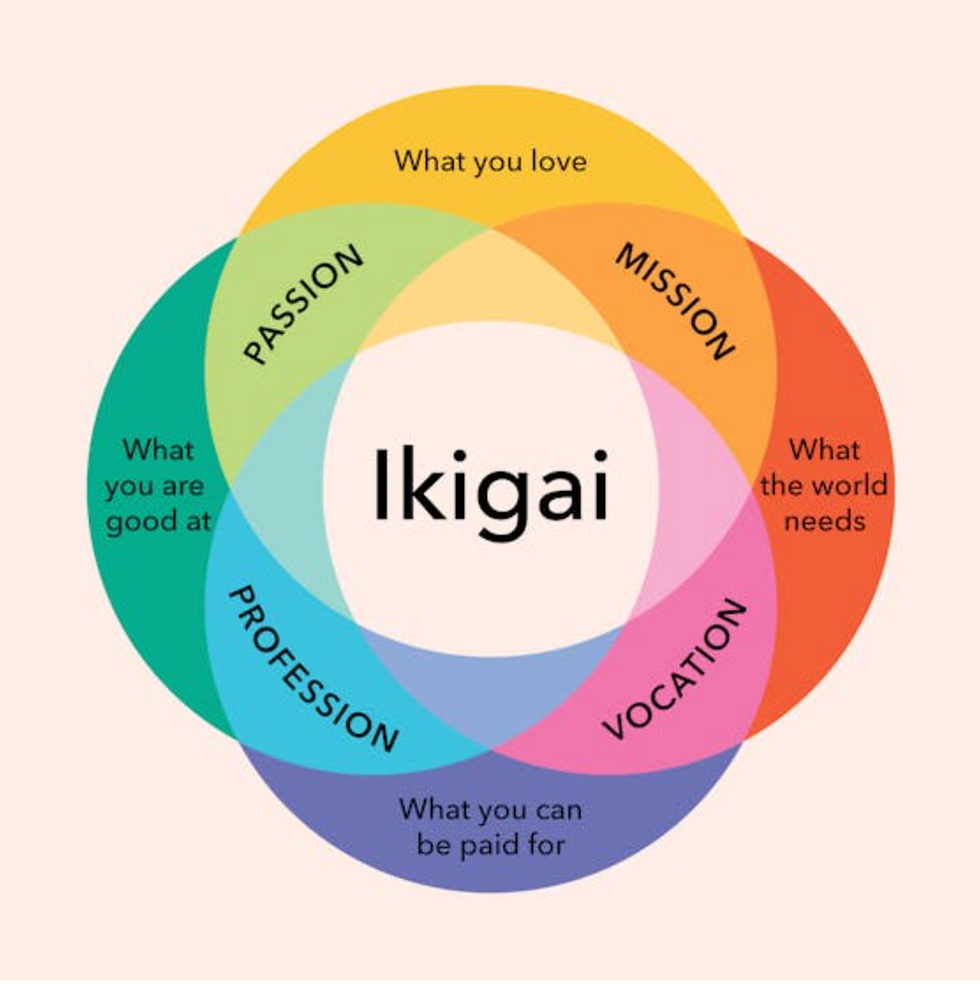
This is where ikigai helps, though not in the way it's usually sold. It’s a Japanese idea about what makes life worth getting out of bed for: what you love, what you’re good at, what the world needs, and what you can be paid for. Two decades in, the overlap isn’t the point; you already have plenty of it. What matters is which of the other circles thinned out while you weren’t looking.
A VP of engineering I coached looked like a clear success, until four years of pure management crowded out the part he loved, building things. He hadn’t written a line of code in years and had no idea how much he missed it.
You can’t see this from the inside, because the full circles look like proof you’re doing fine, and the empty ones get written off as the cost of being a grown-up. Get it wrong, and you pour your energy into the wrong circle, chasing a bigger title when what actually thinned out was meaning.
Naming the right circle is only the start, and turning it into a move is the part most people can’t work out on their own, which is why I built Remix Career around this diagnostic. The aim is work you’d actually stay engaged in, which you’re also more likely to land, because that kind of engagement is obvious and hard to fake, and in a market like this, it’s the thing that still sets you apart.
So if something feels off while everything looks fine on paper, or you’ve just been pushed into a transition you didn’t choose, it’s worth asking which of your circles emptied out, and whether your next move refills it or just puts you back where you were.



Comments